Health for Haiti began in 2014 as a global service-learning course where college students traveled to Haiti to promote sustainable, holistic community development. A critical aspect of the experience was learning that although we are separated by distance, culture, and circumstance, we are all just people doing the best we can with what we have. After the COVID pandemic and Haiti’s sad descent into violence and chaos, the course ended—but the work continued.
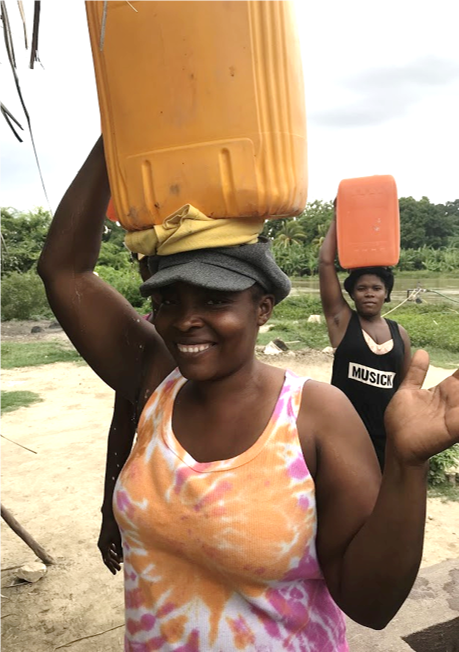
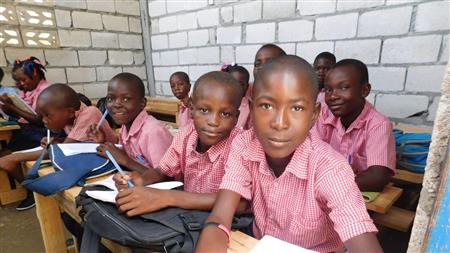
Over the past decade, Health for Haiti helped a school grow from 20 students learning in a church to more than 300 students in kindergarten through ninth grade studying in ten classrooms. We invested in professional development for teachers who provide high-quality education. We partnered with the community to develop gardens that produce rice, beans, corn, and vegetables used for school lunches. We also implemented solar power to filter water from the local river, making it safe to drink for hundreds of people.
Rotary clubs across Central New York have been key partners in this effort from the beginning. Members of the Endicott and Endwell Rotary clubs have contributed leadership, expertise, and sustained support, including project management for solar installations and multiple district grants that funded scholarships, water-system infrastructure, and classroom furniture. Clubs in our district have highlighted Health for Haiti at Foundation events, district conferences, and youth exchange gatherings, helping raise awareness and inspire broader engagement. The project has also been shared with ESRAG for Eastern North America as an example of one part of our region helping another.
Today, Rotary remains actively involved in the next phase of development, including work on sanitation, residential and commercial solar cooking, expanded water filtration, and efforts toward long-term economic sustainability. Endicott and Endwell Rotarians continue to collaborate at events like the annual Taste of Haiti dinner at SUNY Broome, strengthening bonds with the local Haitian community and partners on the ground. This work connects to larger initiatives such as the Connected Communities Project on Cape Cod and the Cape Cod Watershed Institute’s EARTHSHOT proposal, which aims to scale net-zero solutions to developing regions—with Health for Haiti positioned as a potential partner. These efforts, supported by a wide network including Pall Corporation, universities, churches, teachers, medical professionals, and private donors, demonstrate the power of broad-based collaboration to transform lives.
Despite immense challenges, Rotarians continue to engage with partners in Haiti. Fr. Richard Frechette of the Saint Luke Foundation in Haiti recently wrote, “Haiti is a country of deep anguish, lived out in the shadowy edges of human concern.” Health for Haiti strives to bring light to those shadows. But we must do more than acknowledge the suffering of our neighbors in Haiti—we must act by sharing our resources and improving quality of life, thereby recognizing and honoring the bond of our shared humanity.
For more information, visit healthforhaiti.org. Also, these efforts were recently highlighted in the Voices of ESRAG North America newsletter!